Engineering drawings play a critical role in helping manufacturers communicate how a component or assembly should be produced, inspected, or understood. For U.S. manufacturers, mechanical drafting services provide a practical way to turn design data, sketches, measurements, and engineering specifications into structured CAD documentation. Depending on the project, these drawings can define part dimensions, assembly relationships, materials, tolerances, and other technical requirements while keeping documentation clear and consistent across the manufacturing workflow.
Key Takeaways
- Mechanical drafting converts engineering information into clear technical drawings.
- Drawing requirements vary depending on the component, assembly, and manufacturing process.
- Accurate dimensions, annotations, specifications, and revision information are important.
- Drawings should remain consistent with the latest approved design information.
- Outsourcing can provide additional drafting capacity for manufacturers with ongoing CAD workloads.
What Are Mechanical Drafting Services?
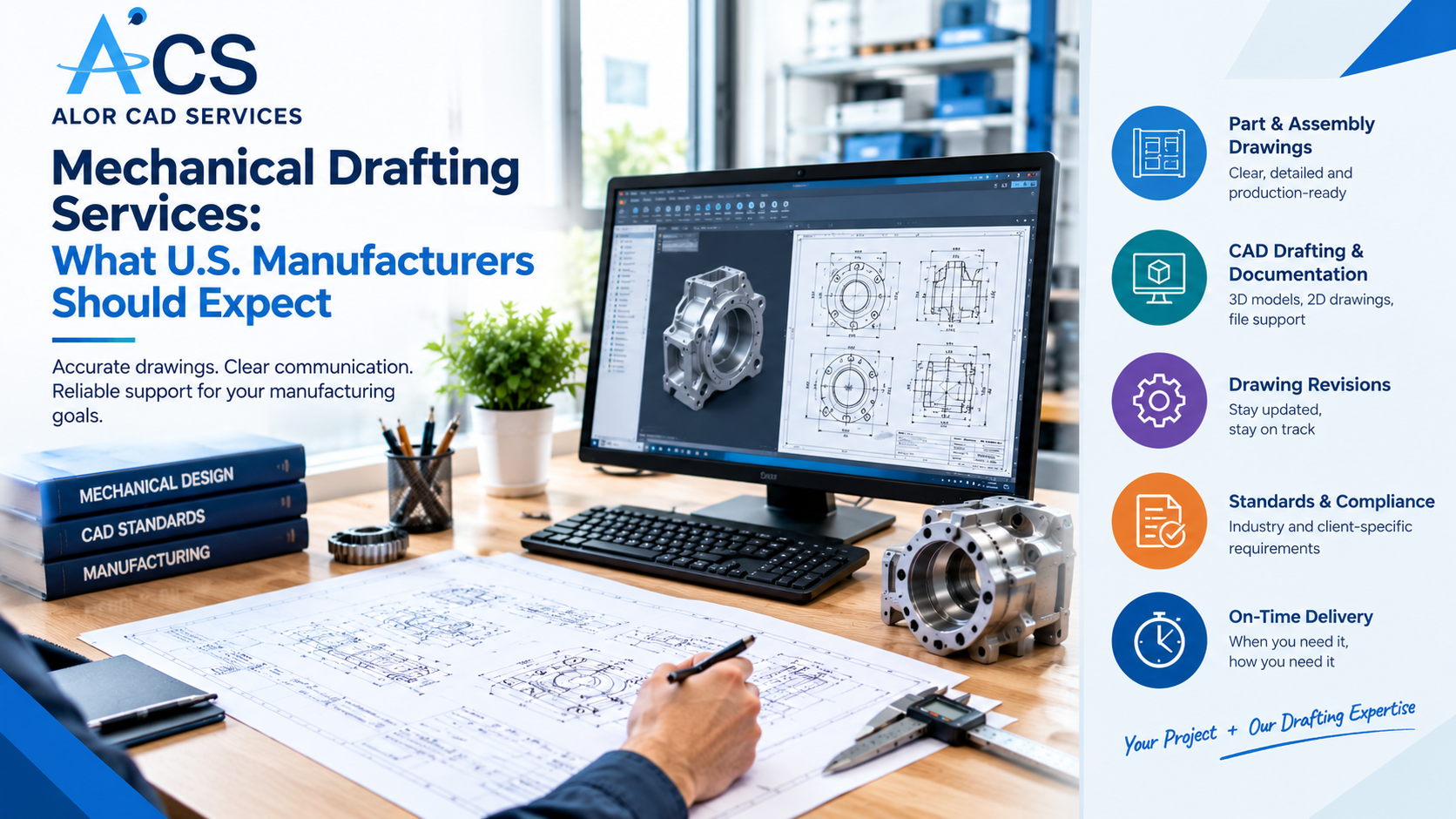
Mechanical drafting services involve creating technical drawings and CAD documentation for mechanical components, products, assemblies, and related engineering requirements. These drawings translate design information into a format that engineers, manufacturers, fabricators, suppliers, and other technical teams can understand and use.
Depending on the project, drafting may involve creating new drawings from supplied engineering information, updating existing CAD files, converting older drawings into digital formats, or preparing detailed documentation for components and assemblies.
There is no single drawing package that applies to every manufacturing project. The required drawings depend on the product, design stage, manufacturing process, client standards, and information available for the project.
What Should U.S. Manufacturers Expect in Mechanical Drafting Documentation?
A mechanical drawing should provide the information needed to clearly communicate the design. The exact contents vary by project, but several elements are commonly important.
1. Component and Part Information
Part drawings typically identify individual mechanical components and provide the dimensions and information needed to define them. Depending on the project, this may include overall dimensions, hole locations, material information, tolerances, surface requirements, and other technical notes.
The drawing should make the component understandable without creating unnecessary confusion. The information shown should also correspond with the available design data and approved project requirements.
2. Assembly Information
Assembly drawings communicate how multiple components fit or relate to one another. They may identify individual parts, component locations, assembly relationships, and other information relevant to the finished assembly.
For manufacturers, consistency between part drawings and assembly documentation is important. Component numbers, names, quantities, and other information should agree across the applicable drawings.
3. Dimensions and Tolerances
Dimensions provide the measurable information needed to define a component or assembly. Depending on the application, drawings may also include tolerances that establish acceptable dimensional variation.
The level of dimensional detail should be appropriate to the design and manufacturing requirements. Drafting should represent the information supplied by the engineering team rather than introducing unsupported dimensional assumptions.
4. Materials and Technical Specifications
Mechanical drawings may include material information, finishes, specifications, or other requirements relevant to the component or assembly.
The information should be based on the approved project documentation. If material or specification details are not available, the drafting team should seek clarification rather than assume what should be used.
5. Drawing Notes and Annotations
Notes and annotations can provide additional information that may not be communicated through dimensions or views alone. These may relate to materials, manufacturing requirements, finishes, assembly instructions, or project-specific information.
Notes should be clear and relevant to the actual project. Generic notes that do not apply to the component can make drawings harder to interpret.
6. Drawing Identification and Revision Information
A properly organized drawing should clearly identify the project and drawing being documented. Depending on the manufacturer’s standards, this may include a drawing number, part name, revision, date, scale, sheet number, and other title-block information.
Revision information is particularly important when drawings change during design or production. Clear identification helps teams distinguish the current version from previous documentation.
How Mechanical CAD Drafting Supports Manufacturers
Mechanical CAD drafting provides manufacturers with digital technical documentation that can be created, updated, reviewed, and managed as designs develop.
CAD documentation can support product development, engineering communication, manufacturing preparation, design revisions, and technical record keeping. It can also make it easier to update an existing drawing when an approved design change occurs.
The exact CAD workflow depends on the manufacturer’s software, file formats, drawing standards, and internal processes. A drafting partner should be able to work within the requirements established for the project.
How Manufacturing Requirements Affect Mechanical Drawings
Mechanical drawing requirements can differ significantly between manufacturers and projects. A drawing prepared for one component or manufacturing workflow may not contain everything required for another.
Manufacturers may have their own standards for:
- Drawing layouts and title blocks
- Dimensioning and annotation practices
- File naming and organization
- Revision procedures
- CAD file formats
- Required notes and specifications
Before drafting begins, the project requirements should be clearly understood. Using a generic drawing template without considering the manufacturer’s actual standards can lead to additional revisions later.
Common Problems That Can Delay Mechanical Drawing Work
Mechanical drafting projects can become difficult when the source information is incomplete, outdated, or inconsistent. These issues may not always be obvious when a project begins.
Common problems include:
- Missing dimensions or unclear measurements
- Conflicting information between drawings
- Outdated CAD files
- Unclear engineering markups
- Missing revision information
- Inconsistent part numbers or names
- Incomplete technical specifications
- Changes that are not reflected across all related drawings
When these issues are identified early, they can usually be clarified before they create larger documentation problems.
How Mechanical Drawings Support the Manufacturing Workflow
Mechanical drawings are not created only for design documentation. They may be used by different teams throughout the manufacturing process.
Engineers may use drawings to communicate design requirements. Manufacturing teams may refer to them when preparing components or assemblies. Suppliers and fabricators may also rely on the information provided in approved technical drawings.
Clear documentation can reduce the need for repeated clarification between teams. For manufacturers managing multiple components or product variations, consistent drafting practices can also make technical documentation easier to review and maintain.
When Should U.S. Manufacturers Consider Outsourcing Mechanical Drafting?
Preparing and maintaining mechanical drawings can become time-consuming when internal engineering teams are managing several projects at once. Outsourced mechanical drafting can provide additional drafting capacity without requiring a manufacturer to expand its internal team for every increase in workload.
Outsourcing may be useful for manufacturers handling new product documentation, drawing updates, CAD conversion, assembly documentation, or periods of increased project demand.
A successful outsourcing workflow should clearly define the information provided by the manufacturer, drawing standards, deliverables, revision process, quality checks, and final approval responsibilities.
What Should Manufacturers Provide Before Drafting Begins?
The drafting process is easier to manage when the project information is clearly organized before work starts. The available information may vary depending on whether the project involves a new drawing, an update, or conversion of an existing document.
Manufacturers may provide CAD files, PDF drawings, sketches, measurements, engineering markups, specifications, photographs, or other relevant project information.
Before drafting begins, it is useful to confirm:
- Required drawing types
- Available source information
- CAD software or file format requirements
- Client-specific drawing standards
- Revision expectations
- Required notes and specifications
- Final deliverable format
Clear inputs help reduce unnecessary clarification and provide a consistent starting point for the drafting team.
What Should You Check Before Approving a Mechanical Drawing?
A final review should confirm that the drawing accurately represents the latest approved design information. The review should consider both the technical content and the organization of the drawing.
A practical final check can include:
- Project and component identification
- Dimensions and tolerances
- Views and drawing details
- Materials and specifications
- Notes and annotations
- Part numbers and quantities
- Revision information
- Consistency with related drawings
- Current approved design information
The exact review process depends on the manufacturer’s internal standards and project requirements. However, checking these details before final approval can help reduce avoidable revisions.
Why Professional Mechanical Drafting Matters
Professional drafting should do more than produce drawings that look organized. The documentation should communicate the supplied engineering information clearly and remain consistent with the manufacturer’s requirements.
For U.S. manufacturers, this means paying attention to drawing standards, dimensions, specifications, revision control, file organization, and consistency between related documents. Professional drafting support can be particularly useful when internal engineering teams need additional capacity or when several projects require documentation at the same time.
ALOR CAD Services provides mechanical CAD drafting support for manufacturers and OEMs that need professional technical documentation. Its services can support mechanical drawings, CAD documentation, drawing updates, and other project-specific drafting requirements based on the information and standards supplied by the client.
Conclusion
Mechanical drafting documentation provides manufacturers with a clear way to communicate components, assemblies, dimensions, specifications, and other technical design information. The exact requirements depend on the product, manufacturing process, engineering workflow, and standards established for the project.
Accurate drawings should reflect the latest approved information, remain consistent across related documents, and provide the technical details needed by the teams using them. For manufacturers managing multiple projects, professional drafting support can also provide additional capacity while maintaining a structured documentation workflow.
If your manufacturing team needs reliable drafting support for mechanical components, assemblies, or technical CAD documentation, contact ALOR CAD Services to discuss your project requirements and drafting workflow.
Frequently Asked Questions
1. What do mechanical drafting services include?
Mechanical drafting services can include part drawings, assembly drawings, CAD updates, technical documentation, drawing conversions, and other project-specific drafting work.
2. Who uses mechanical drafting services?
Manufacturers, OEMs, engineering teams, fabricators, and other businesses involved in mechanical product development may use drafting services.
3. Can mechanical drawings be created from existing CAD files?
Yes. Existing CAD files can be used as a source for creating, updating, or modifying technical drawings based on approved project information.
4. Can manufacturers outsource mechanical drafting?
Yes. Manufacturers can outsource drafting when they need additional capacity or support with ongoing technical documentation requirements.
5. Why is revision control important?
Revision control helps teams identify the current approved drawing and avoid using outdated technical documentation during engineering or manufacturing workflows.