Solar installations require more than selecting panels and deciding where to place them. A successful project begins with a coordinated design that considers the site, energy requirements, equipment, electrical configuration, and installation requirements. For U.S. solar installers, engineering teams, and EPCs, solar PV system design provides the foundation for planning a photovoltaic installation. It establishes how the system will generate electricity, how its components will work together, and what technical information is needed before installation begins.
A well-developed design helps project teams identify issues early. Equipment compatibility, shading, roof conditions, and electrical requirements can all influence the final configuration. This guide explains the solar PV system design process, its main components, important design considerations, and how accurate CAD documentation supports project planning.
What Is Solar PV System Design?
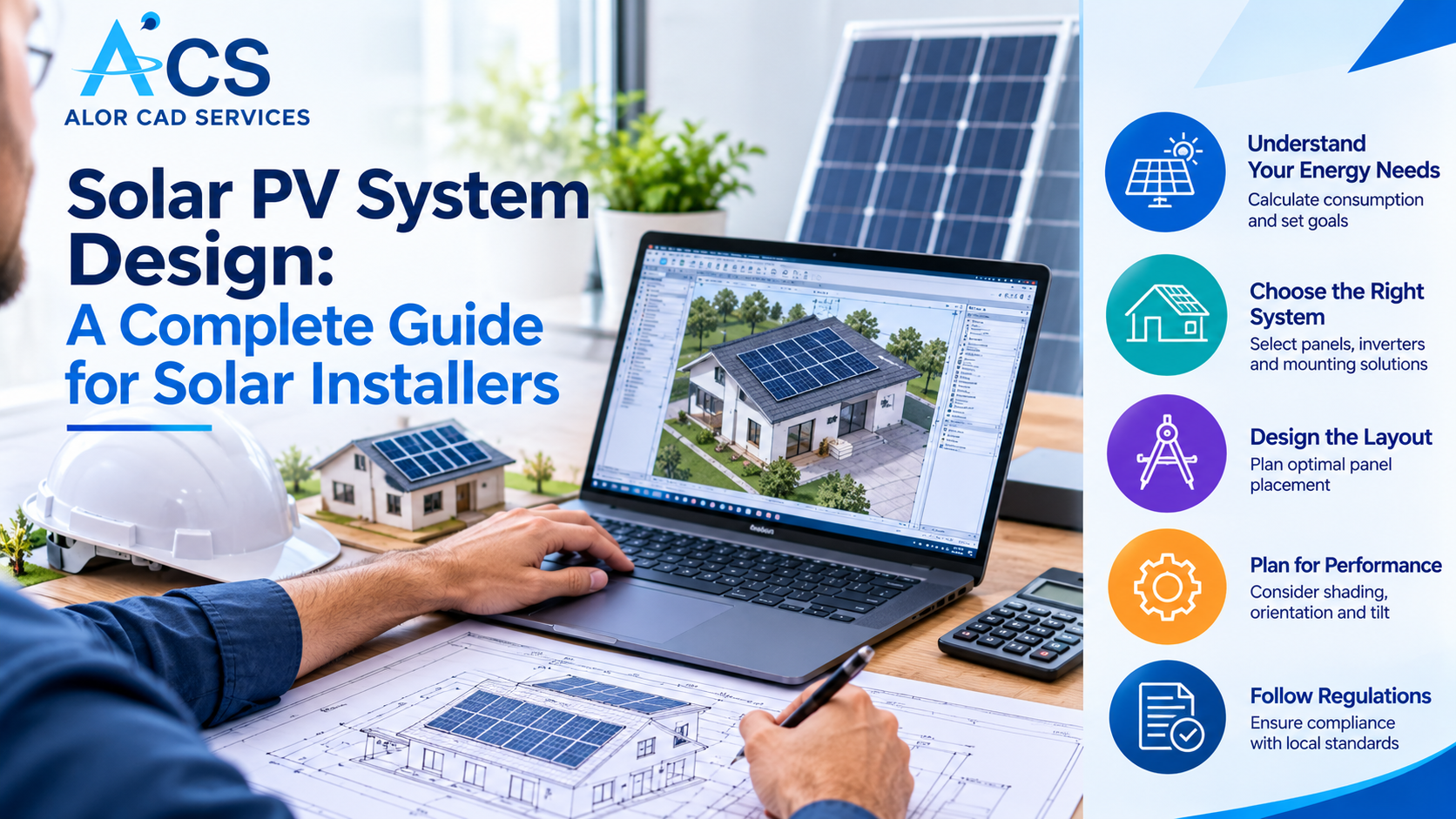
Solar PV system design is the process of planning and configuring a photovoltaic system to meet a project’s energy requirements and site conditions. It involves determining system size, selecting equipment, arranging solar modules, and developing the electrical and supporting documentation needed for installation. The process varies by project. A residential rooftop installation may require a different approach from a commercial building or ground-mounted solar array.
A typical photovoltaic system design may address:
- Site conditions and available installation space
- Energy requirements and proposed system capacity
- Solar module selection and array configuration
- Inverter selection and electrical compatibility
- Mounting arrangements and structural considerations
- Electrical layouts and supporting documentation
The objective is to develop a system configuration that meets project requirements and provides clear technical information for installation and review.
What Are the Main Components of a Solar PV System?
A solar PV system contains components that work together to generate, convert, and distribute electricity. The exact configuration depends on the project and whether energy storage is included.
Solar Modules
Solar modules convert sunlight into direct current (DC) electricity. During design, installers consider module specifications, available installation space, and the number of modules needed to reach the proposed system capacity. Placement also matters. Roof orientation, shading, and available mounting areas can influence the array arrangement.
Inverters
Inverters convert DC electricity from solar modules into alternating current (AC) electricity for use by electrical equipment or connection to the grid. Designers select inverters based on the array configuration, electrical requirements, and equipment specifications. A system may use string inverters or module-level microinverters. The selected inverter must be compatible with the solar array’s electrical configuration.
Mounting Structures
Mounting structures support solar modules and secure them to a roof or ground-mounted foundation. For rooftop projects, the design should consider roof conditions, available mounting areas, attachment methods, and applicable structural requirements. Ground-mounted projects may need different foundation and support arrangements.
Batteries and Energy Storage
Some installations include batteries to store electricity for later use. Energy storage may support backup power, self-consumption, or other project-specific needs. When batteries are included, design documentation should account for their location, electrical connections, and compatibility with other system components. The storage configuration should also align with the inverter and intended system operation.
What Should Solar PV System Design Include?
A complete design package should communicate how the proposed system will be installed and how its components will work together. Documentation varies by project and applicable requirements, but several core elements are common.
Site Assessment and Layout
Site assessment establishes the conditions that influence the installation. For rooftop projects, installers review available roof area, orientation, shading, and relevant building information. For ground-mounted systems, assessment may include available land, equipment locations, access, and other site conditions.
The site layout should show where the proposed array and major equipment will be located. Accurate site information helps the design team reflect actual conditions and identify constraints before installation.
Solar Array Layout
The solar array layout shows the location and arrangement of PV modules. It should communicate module quantities, placement, and how the array fits within the available area. For rooftop systems, the layout may show roof edges, mounting areas, access paths, and relevant clearances. Ground-mounted designs may show module rows and supporting structures. The array layout must be coordinated with equipment selection and installation requirements. Changes to module placement can affect electrical configuration and equipment choices.
System Sizing and Equipment Selection
System sizing establishes the proposed capacity and helps determine the required number of modules and inverters. The design team considers energy requirements, site conditions, equipment specifications, and expected performance. Equipment selection should account for the electrical characteristics of modules and inverters. For example, the number of modules connected in a string must be compatible with the inverter’s operating voltage range and maximum DC input voltage.
System modeling tools can help evaluate equipment combinations and estimate energy production using project-specific inputs. The design should document selected equipment and keep the proposed configuration consistent across drawings.
Electrical Design
Electrical design explains how solar modules, inverters, and other electrical components connect. Depending on the project, documentation may include:
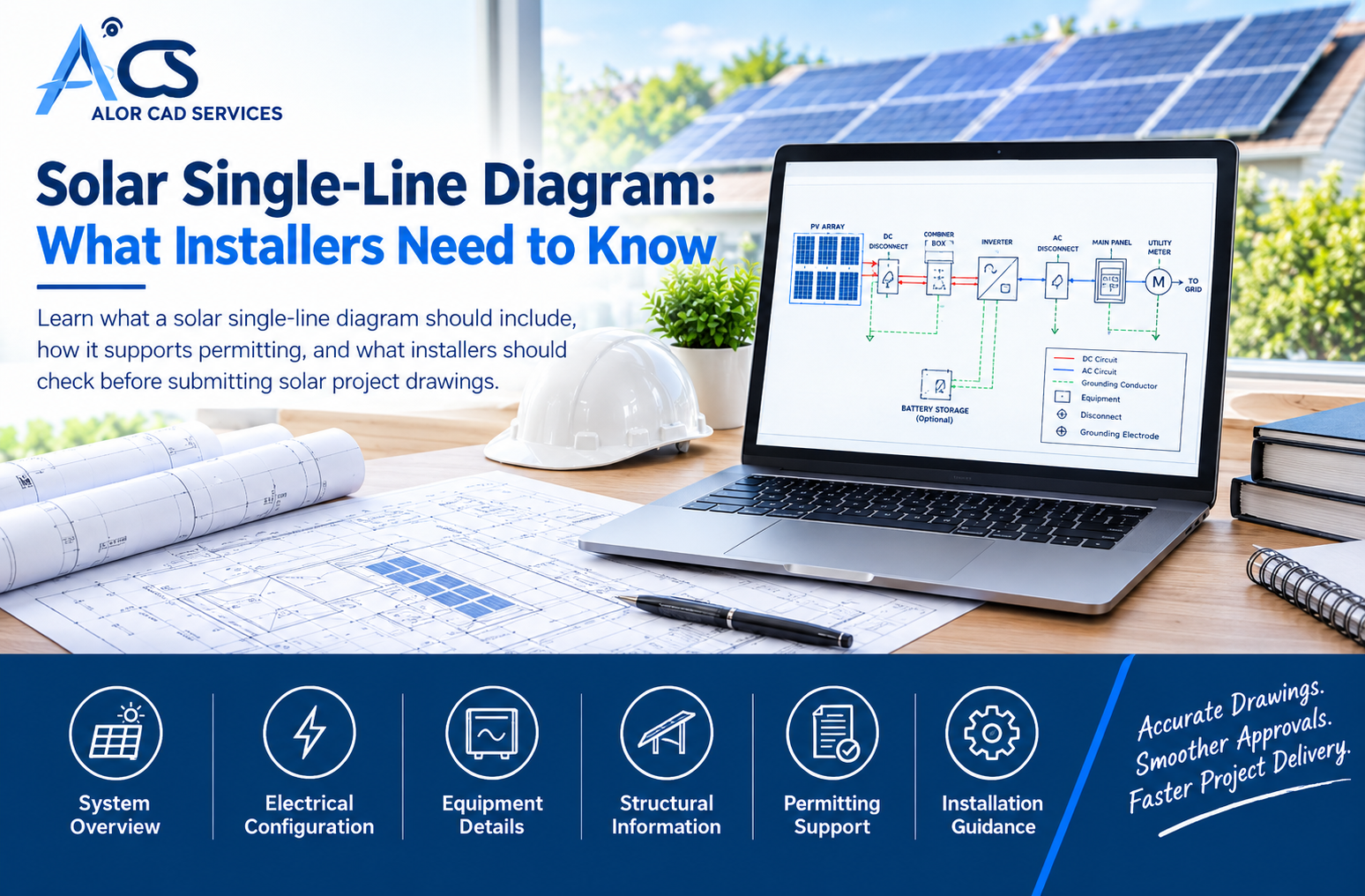
- Single-line diagrams
- String configuration and module quantities
- Inverter locations and specifications
- DC and AC wiring information
- Disconnects and protective devices
- Grounding and bonding information
- Equipment labels and applicable electrical notes
Electrical documentation should align with the physical array layout and selected equipment. For example, module quantities shown on the layout should match the electrical configuration and equipment information. Consistency helps installers and reviewers work from the same technical details.
Structural and Mounting Information
Structural information helps establish how the array will be supported. Rooftop projects may require roof framing information, mounting methods, attachment details, and supporting calculations. Ground-mounted systems may need information about foundations, support structures, and site conditions. The level of structural documentation depends on the project and applicable requirements. Details should be based on verified project information and reviewed by appropriate qualified professionals.
Energy Production Estimates
Energy production estimates help teams understand the expected electricity generation of the proposed system. Estimates may account for system capacity, location, orientation, shading, temperature, and other performance factors. They can support project planning and comparisons between design configurations. However, modeled production is an estimate, not a guarantee. Actual performance can vary with weather, equipment, installation conditions, and system operation.
What Factors Affect Solar PV System Design?
Solar PV system design must account for conditions that influence performance, equipment selection, and installation requirements.
Site Location and Sun Exposure
Location influences the amount of sunlight available throughout the year. Designers consider the site’s solar resource, module orientation, and potential shading when developing the array layout. Nearby buildings, trees, and other obstructions may affect sunlight reaching the modules. Identifying these conditions early helps the design team evaluate the proposed arrangement.
Roof or Ground Conditions
The installation surface affects how the array can be positioned and supported. For rooftop systems, designers consider roof condition, available space, and structural capacity. Ground-mounted installations may require additional evaluation of site conditions and support arrangements.
Equipment Compatibility
Modules, inverters, mounting systems, and storage equipment must work together within the proposed configuration. Designers should verify specifications and confirm that selected components suit the project. A change to one component may affect other design elements. For example, changing the module model can affect the number of modules per string and the electrical configuration.
Local Requirements
Requirements can vary by jurisdiction, utility, building type, and installation method. The applicable permitting authority and utility should be consulted to confirm required drawings, calculations, and supporting documents. Installers should verify current requirements before finalizing the design package.
Common Problems in Solar PV System Design
Design issues can arise when project information is incomplete, equipment details are inconsistent, or drawings are not coordinated.
Common problems include:
- Inaccurate site measurements
- Incorrect module quantities
- Equipment specifications that do not match the design
- Inconsistent array layouts and electrical diagrams
- Missing mounting or structural information
- Unclear equipment locations
- Incomplete labels and electrical notes
- Outdated drawing revisions
These issues can create additional review work or require changes before installation. For example, a mismatch between the module layout and electrical diagram can create uncertainty about the proposed system configuration. A coordinated design review helps identify missing information and inconsistencies before the project moves forward.
How to Prepare Better Solar PV System Designs
A structured workflow helps installers manage requirements and maintain consistency across project documentation.
A practical process includes:
- Review the project scope, site information, and applicable requirements.
- Collect energy requirements and relevant building or site details.
- Evaluate the installation area and identify shading or mounting constraints.
- Select suitable modules, inverters, and other system components.
- Determine the array configuration and electrical connections.
- Prepare site layouts, electrical diagrams, and supporting documentation.
- Coordinate equipment specifications, quantities, and locations across drawings.
- Review the package for accuracy and completeness before submission or installation.
The objective is to develop a coordinated design that reflects project requirements and provides clear information for review and installation teams.
How CAD Support Can Help Solar Installers
Preparing and updating solar design documentation can become time-consuming when installers manage multiple projects or frequent design changes. Professional CAD support can provide additional drafting capacity, allowing internal teams to focus on project planning, engineering coordination, and installation activities.
CAD drafting support may include:
- Preparing solar array layouts
- Developing site and roof plan documentation
- Creating electrical drawings and single-line diagrams
- Updating equipment locations and specifications
- Coordinating drawing revisions
- Preparing solar permit documentation
- Maintaining consistency across project drawing packages
A useful CAD partner works from the project information and design requirements provided by the client. Clear communication about missing information, drawing changes, and documentation needs can support an organized workflow.
ALOR CAD Services for Solar PV System Design
ALOR CAD Services provides solar CAD drafting and technical documentation for U.S. installers, contractors, and EPCs. Services include PV layouts, site plans, electrical drawings, and single-line diagrams, tailored to each project’s needs. Explore our solar design and drafting services to see how we can support your solar projects.
Conclusion
Solar PV system design combines site conditions, equipment selection, system sizing, and electrical planning to create a coordinated installation plan. Accurate documentation helps installers reduce revisions and keep projects on track while meeting applicable technical and permitting requirements. If your team needs support preparing or updating solar design documentation, contact ALOR CAD Services to discuss your project requirements and CAD drafting needs.
Frequently Asked Questions
What is solar PV system design?
Solar PV system design is the process of planning a photovoltaic installation, including system sizing, equipment selection, array layout, electrical configuration, and supporting documentation.
What is included in photovoltaic system design?
It commonly includes site assessment, solar array layouts, equipment specifications, electrical drawings, and structural information where required.
What is the difference between PV design and solar power system design?
PV design typically focuses on the photovoltaic array and its components. Solar power system design may also include energy storage and electrical integration, depending on the project.
Why is accurate solar PV system design important?
Accurate design helps coordinate equipment specifications, array layouts, electrical configurations, and supporting documentation before installation.
Can CAD companies help with solar PV system design?
Yes. CAD service providers can support project documentation through array layouts, site plans, electrical drawings, and revisions based on information provided by the client.